
.webp)
Ex-showroom Price*
On Road Price*
EMI Rs 14,419 per month For 5 years
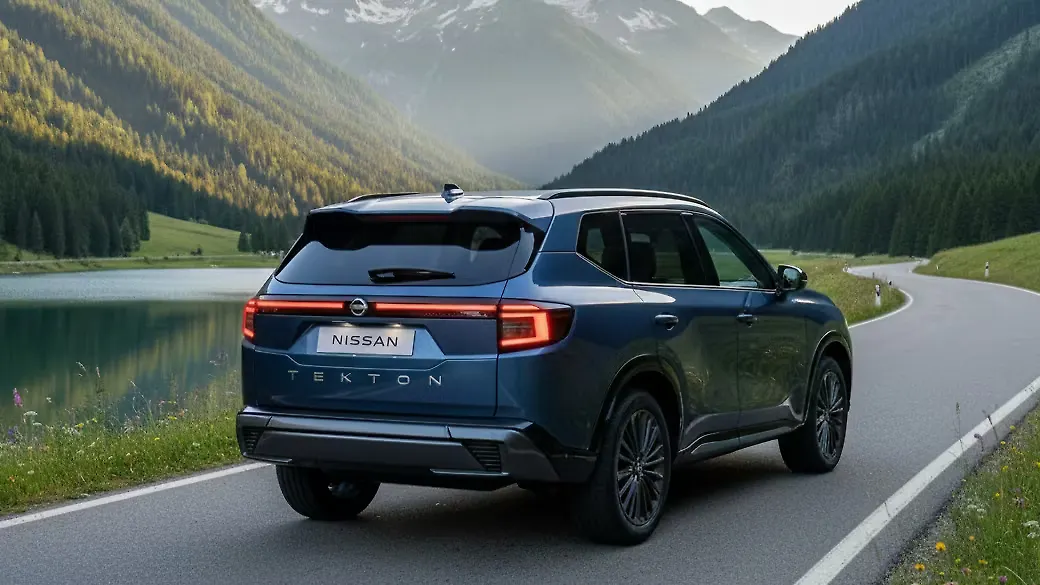
The Nissan Tekton has emerged as one of the most eagerly anticipated SUVs slated for launch in India in 2026, marking a significant milestone in Nissan Motor India’s strategy to reinvigorate its presence in one of the world’s fastest-growing automotive markets. Positioned in the highly competitive C-segment SUV category, the Tekton isn’t just another newcomer it represents Nissan’s ambition to blend rugged design, modern technology, and lifestyle-oriented practicality while taking aim at established rivals such as the Hyundai Creta, Kia Seltos, Maruti Suzuki Victoris, Volkswagen Taigun, Skoda Kushaq, and Toyota Urban Cruiser Hyryder.
Nissan has chosen a distinctive name for this SUV Nissan Tekton Derived from the Greek word meaning “craftsman” or “architect,” the name reflects Nissan’s intent to showcase engineering precision, structural strength, and purposeful design in this model. It is a declaration of intent Nissan isn’t merely filling a gap in its lineup; it’s aiming for a refined SUV that embodies thoughtful design, confident performance, and adaptability for modern lifestyles.
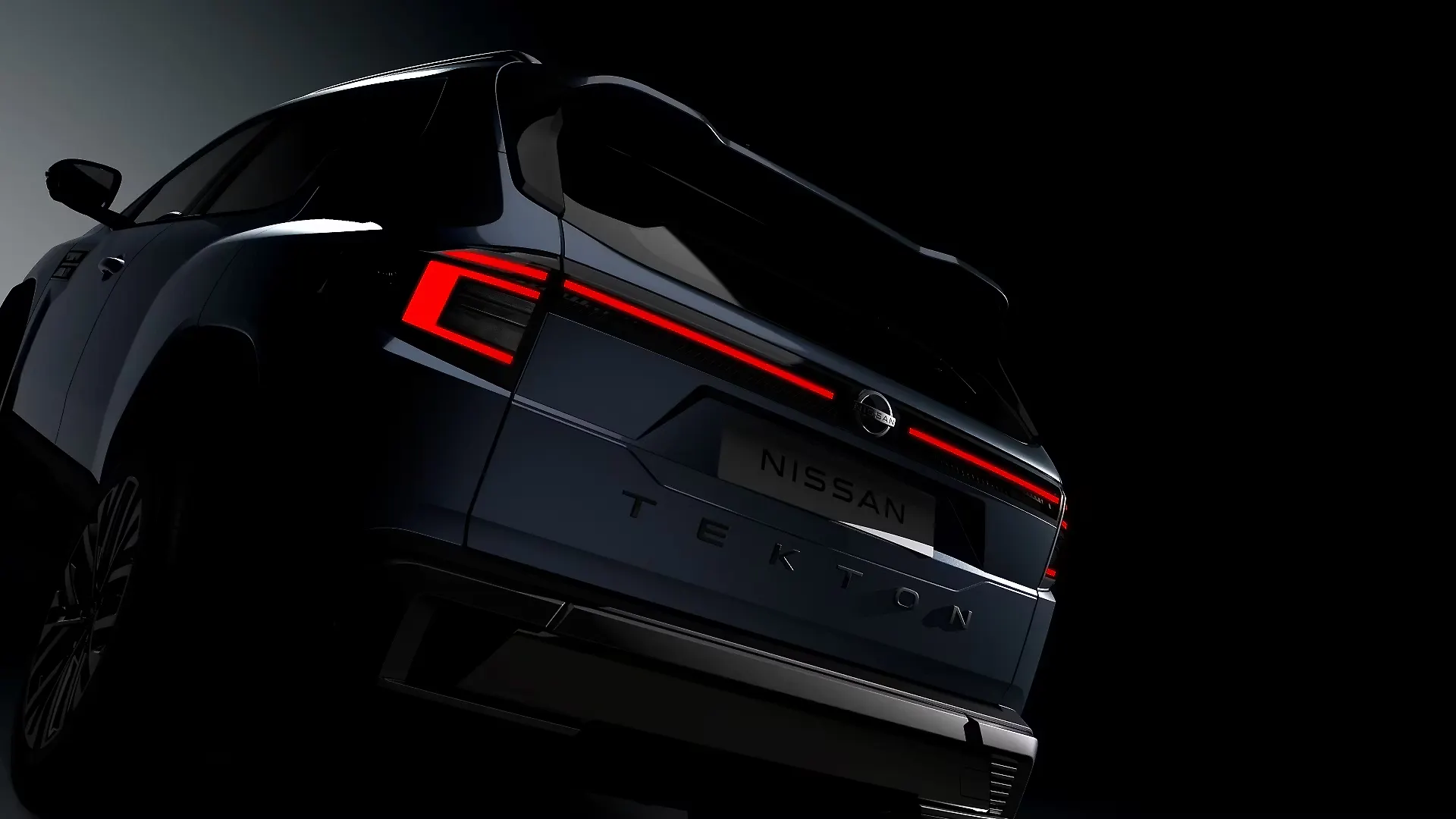
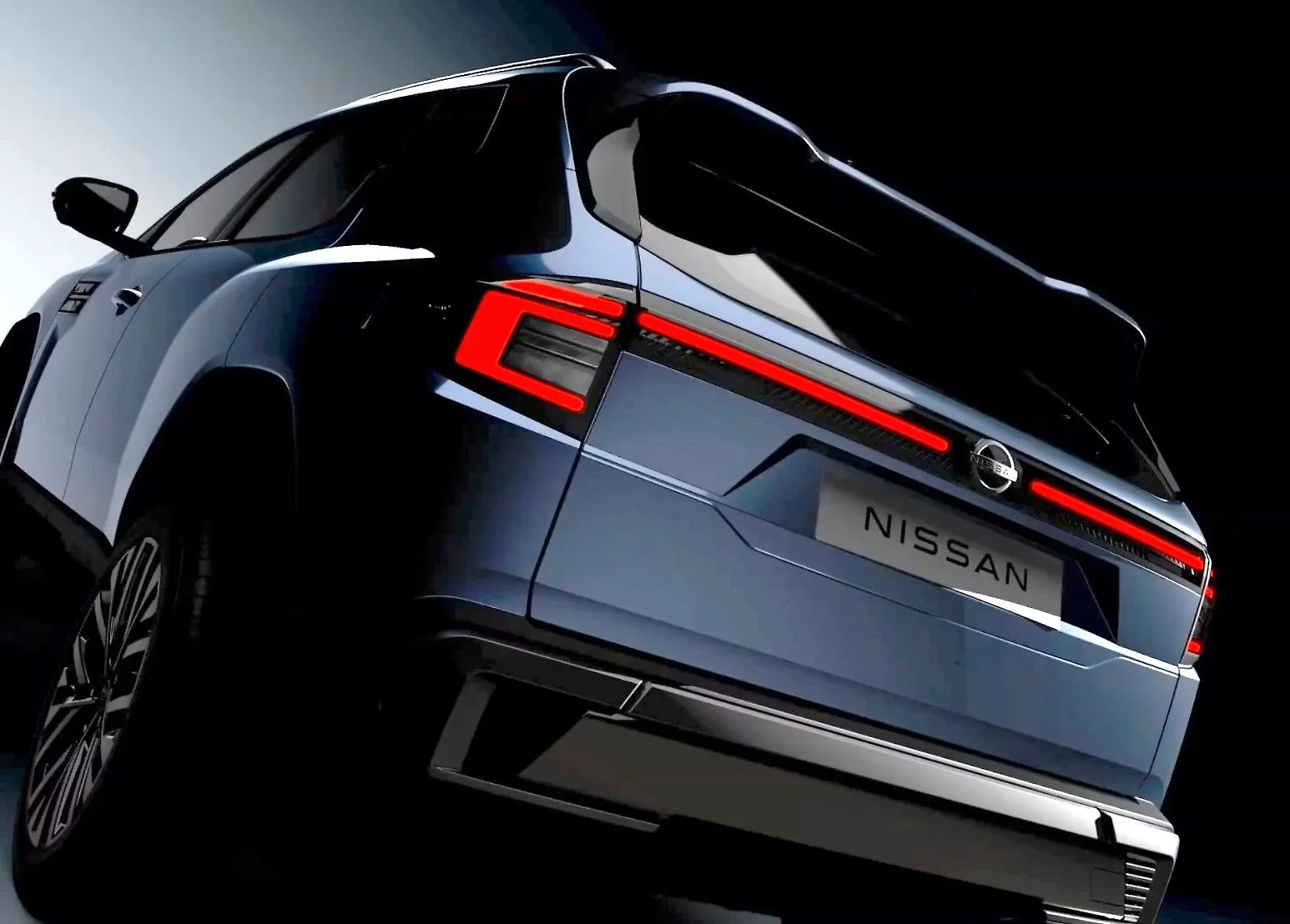
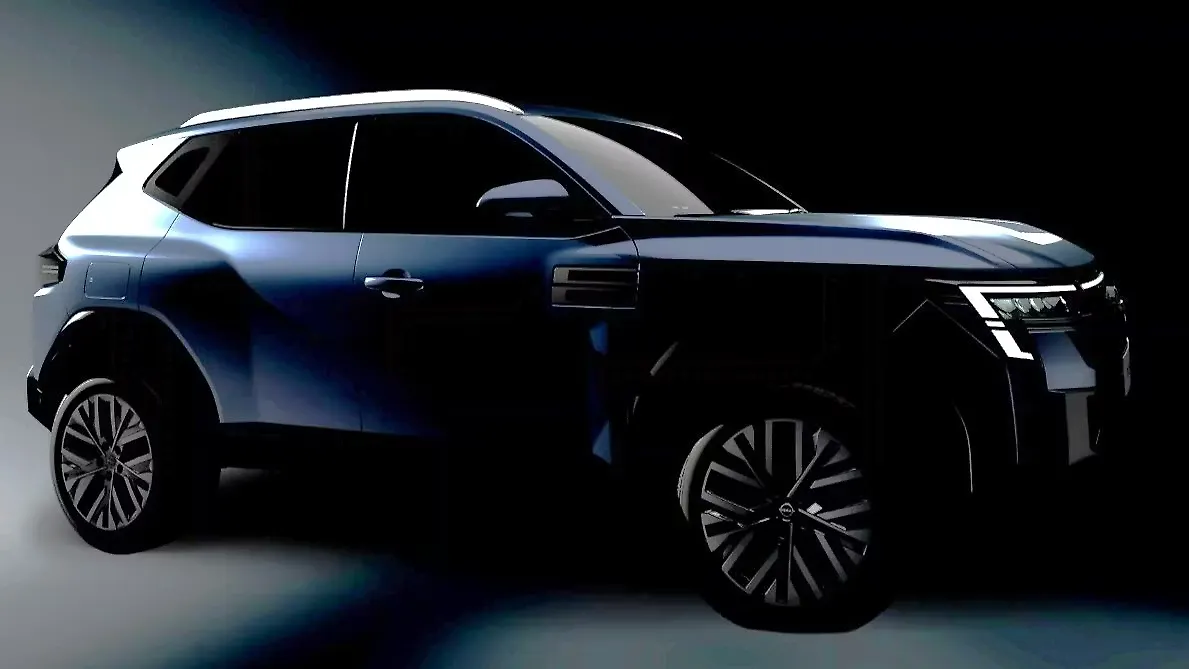
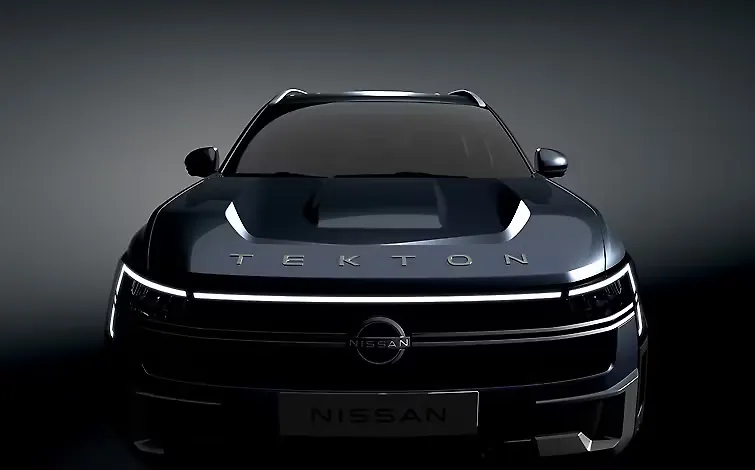
From the earliest teasers, the Nissan Tekton’s exterior has made a strong impression. Designers appear to have taken cues from Nissan’s legendary Patrol SUV a vehicle long associated with rugged capability and translated those cues into a package suited for urban roads as well as occasional off-the-beaten-path excursions. The SUV’s front end is characterised by a bold grille, sleek LED lighting elements with C-shaped signatures, and a sculpted bonnet that contributes to a commanding road presence.
The side profile emphasises purposeful muscle, with robust wheel arches and a confident stance that avoids the overly soft looks typical of many rivals. Signature details like roof rails, distinctive alloy wheel designs, and possibly a roof-mounted rear spoiler contribute to a complete and modern SUV aesthetic. At the rear, a connected LED lightbar and squared-off elements further underscore the vehicle’s contemporary design ethos.
Underneath its striking sheet metal, the Nissan Tekton utilises the CMF-B platform, a modern architecture shared with the next-generation Renault Duster. This platform is designed to support a variety of powertrains while delivering a good balance of comfort, handling stability, and build quality. For India, the Tekton is expected to come initially with petrol powertrains that prioritise fuel efficiency and smooth performance. Nissan may also introduce electrified versions, such as mild- or strong-hybrid variants, to meet evolving customer expectations and emission regulations.
There’s speculation reinforced by industry chatter that all-wheel drive could be offered on higher-end trims, enhancing the SUV’s appeal to buyers who want greater traction and confidence in varied road conditions. While Nissan has not officially confirmed every detail, this suggests the company is thinking beyond basic urban use, positioning the Tekton as a versatile choice for those who enjoy weekend adventures or family road trips.
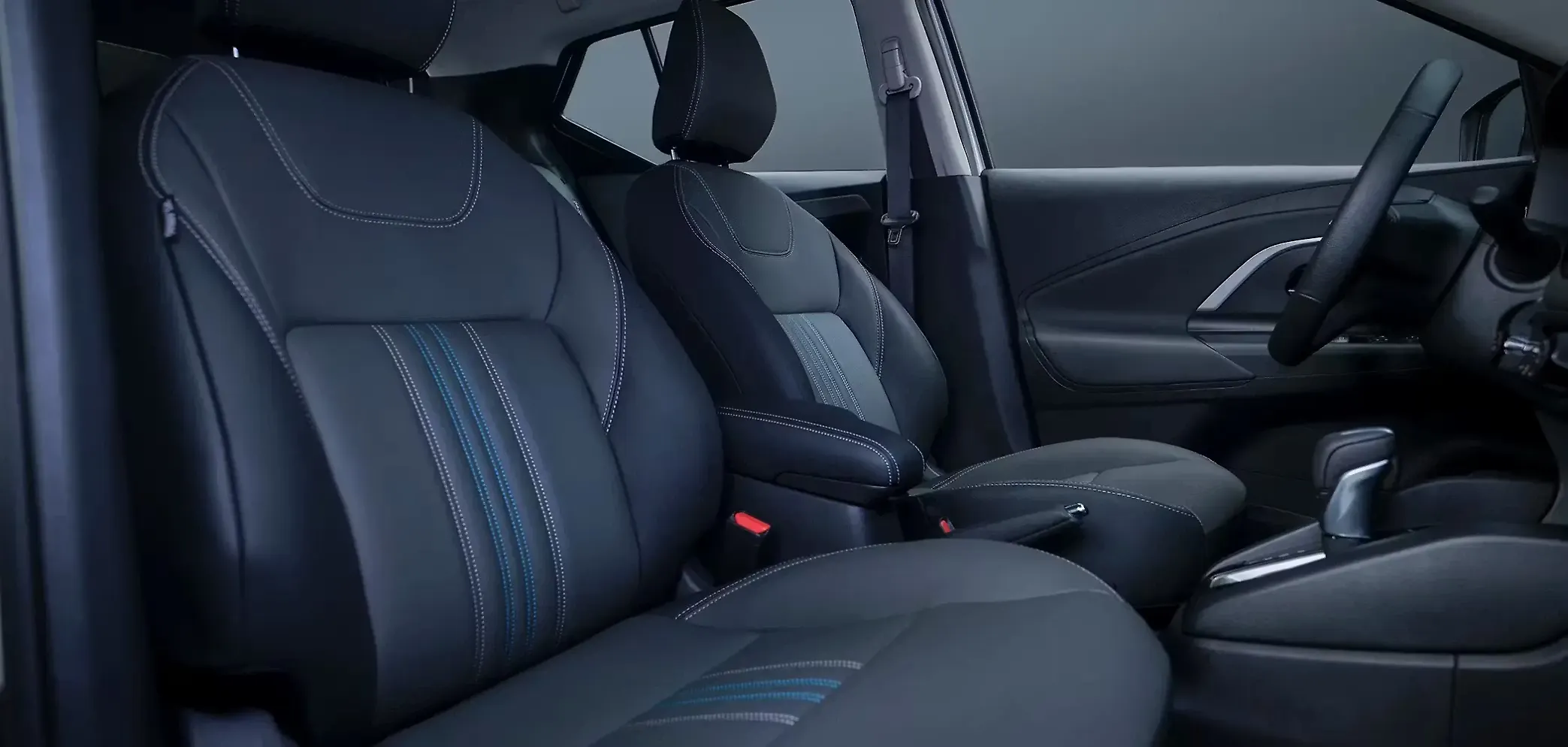
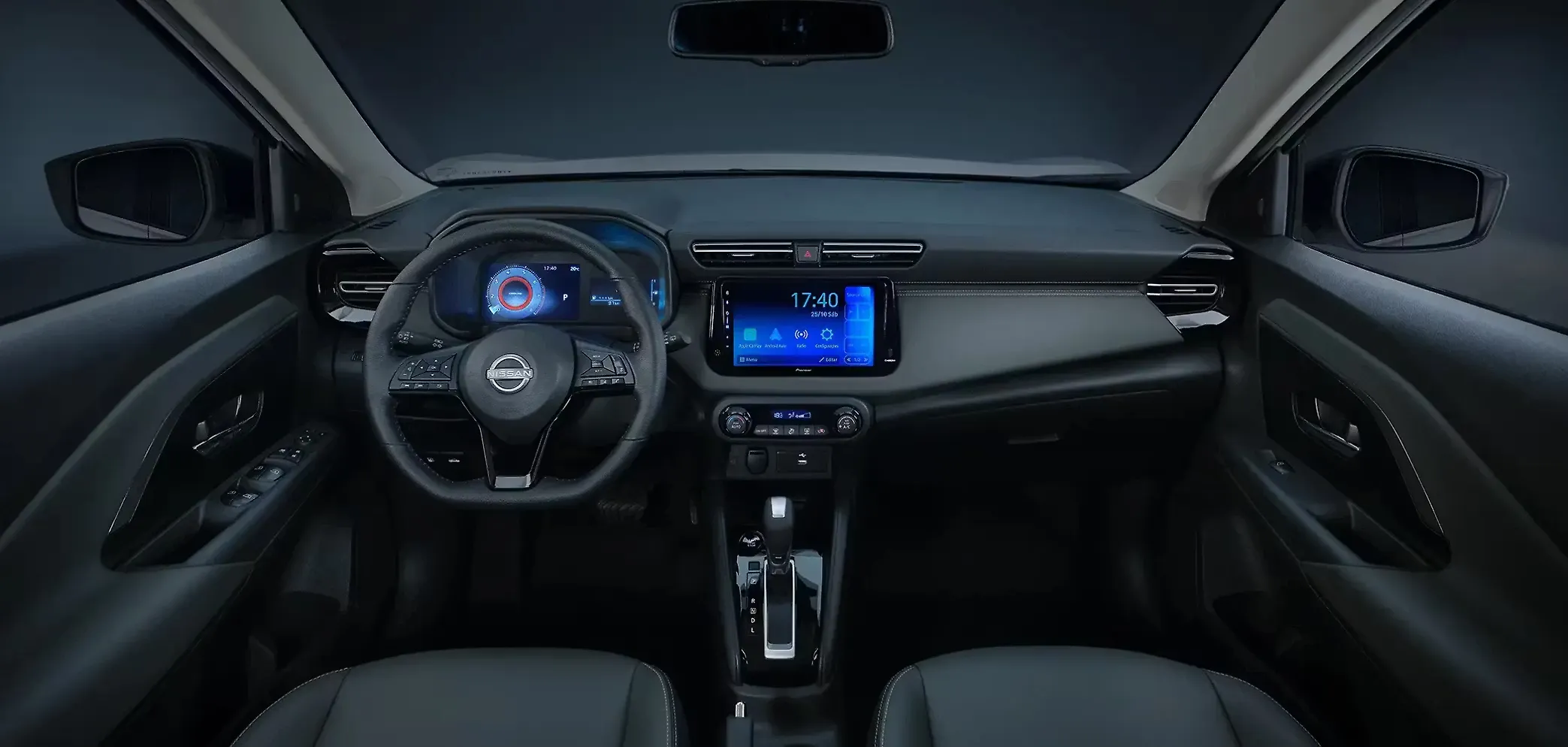
Official interior details remain limited, but early previews and industry expectations point to a cabin that seeks to rival its segment’s best. A layered dashboard with high-quality materials, possibly in a triple-tone finish, will aim to elevate the in-car experience. Technology features such as a large touchscreen infotainment system with seamless smartphone connectivity, a digital driver display, and advanced connectivity options are expected to be part of the Tekton’s suite. Features like ventilated seats, panoramic sunroof options, and a sophisticated climate control system could further set it apart from many competitors.
Safety is also likely to be a priority. With consumer expectations rising, especially in the SUV segment, Nissan is expected to include a comprehensive safety package from multiple airbags and stability control systems to advanced driver assistance features. While definitive specifications are still under wraps, designs in this segment increasingly prioritise active and passive safety, and the Tekton will be expected to match or exceed these benchmarks.
The Tekton represents more than a new model it is a cornerstone of Nissan’s renewed growth strategy in India. Alongside other forthcoming launches, such as the compact MPV Gravite and a planned seven-seater SUV for 2027, the Tekton is positioned to broaden Nissan’s product portfolio significantly. The company has acknowledged that expanding its presence in key segments like SUVs and family vehicles is vital to strengthening its foothold in India’s dynamic market landscape.
In addition to serving Indian consumers, the Tekton will also be part of Nissan’s export strategy. By manufacturing the SUV at the Renault-Nissan Chennai plant, the company aims to supply select international markets, reinforcing India’s role in the brand’s global production network.
While Nissan is yet to confirm final pricing, industry insights suggest that the Tekton could adopt an aggressive price band to attract buyers in a segment dominated by well-established players. Estimates indicate an ex-showroom range starting around 7,59,682 stretching up to roughly ₹12 Lakh for higher variants, making it competitive against key rivals. This strategy could help the Tekton gain traction among buyers seeking SUV versatility without a premium-only price tag.
As the 2026 launch date approaches, anticipation for the Nissan Tekton continues to build. It stands not only as a new SUV but as a statement of Nissan’s renewed commitment to India and its automotive ecosystem. With bold design, a capable platform, technology-rich interiors, and strategic positioning in a crowded SUV market, the Tekton is poised to be one of the most talked-about launches of the year. Whether it will succeed against entrenched rivals remains to be seen, but Nissan’s renewed momentum powered by models like the Tekton suggests a more competitive and exciting future for the brand in India.
This pricing estimate places it directly against popular rivals in the C-segment SUV category and reflects Nissan’s strategy to make the Tekton an appealing choice for value-conscious buyers seeking a feature-rich and practical SUV.
Estimated Price Range (India, Ex-Showroom):
* Base variants: Rs 7,59,682
* Mid to top variants: Rs 12To Rs 15 Lakh
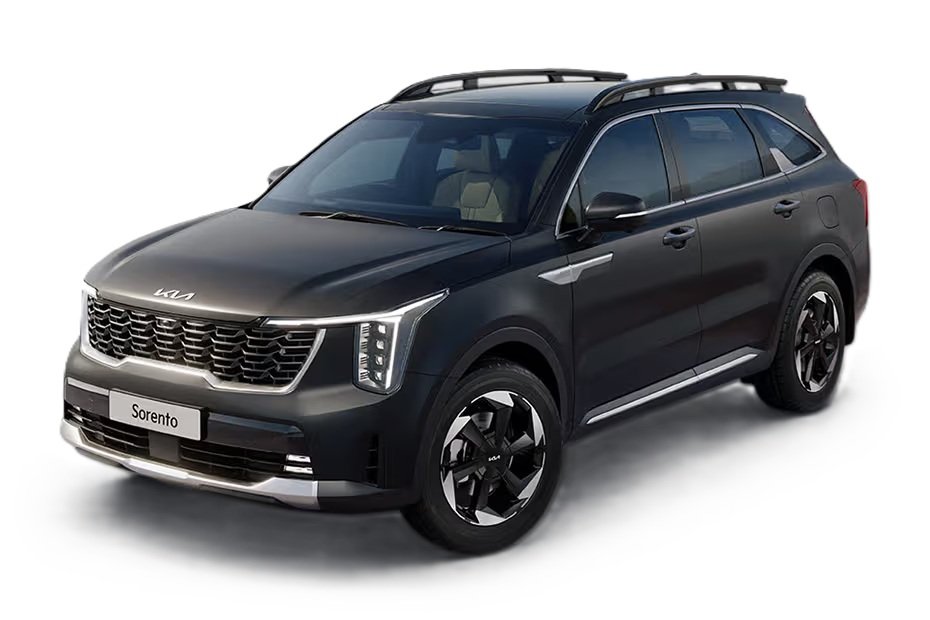
Kia has expanded its Indian SUV portfolio with the launch of the Kia Sorento, a premium three-row SUV positioned above the Seltos and as the brand's new flagship internal-combustion model in India. Launched on September 4, 2026, the Sorento starts at Rs 27.99 lakh ex-showroom and is locally manufactured at Kia's Anantapur facility in Andhra Pradesh.
The new Sorento is significant for Kia because it marks the company's entry into India's strong-hybrid passenger-vehicle market. It is also the brand's first three-row ICE SUV in the country, giving Kia a new contender in a segment populated by established premium SUVs.
The biggest talking point is the Sorento's 1.6-litre turbo-petrol strong-hybrid powertrain. The petrol engine produces 180hp and 265Nm, while the electric motor contributes 65hp and 264Nm. The combined system is paired with a six-speed torque-converter automatic transmission. Depending on the variant, buyers can choose front-wheel drive or all-wheel drive.
Kia's hybrid approach is particularly interesting because the Sorento uses a turbocharged petrol engine, unlike many strong-hybrid SUVs that rely on naturally aspirated petrol engines. This combination is aimed at delivering a balance between performance, efficiency and smoother urban driving.
For customers who continue to prefer diesel power, Kia offers the Sorento with a 2.2-litre diesel engine producing 193hp and 442Nm. It is paired with an eight-speed dual-clutch automatic transmission and can also be specified with either front-wheel drive or all-wheel drive, depending on the trim.
This two-powertrain strategy allows Kia to target buyers with very different requirements. The hybrid can appeal to customers prioritising efficiency and electrification, while the diesel remains attractive to those who regularly travel long distances or want strong low-end torque.
The Sorento is designed as a family-focused premium SUV, with both six-seat and seven-seat layouts available. Its three-row configuration gives Kia a direct competitor in the growing premium family-SUV segment.
The SUV measures 4,815mm in length, 1,900mm in width and has a 2,820mm wheelbase, providing a substantial footprint for passengers.
Its larger dimensions and three-row layout make the Sorento a more premium and spacious proposition than Kia's existing mid-size SUVs.
Kia has equipped the Sorento with a long list of technology and convenience features. Depending on the variant, the SUV gets a 12.3-inch touchscreen, powered driver's seat with lumbar support, wireless smartphone charging, Apple CarPlay and Android Auto, premium lighting and multiple parking-assistance features.
Higher variants also benefit from advanced driver-assistance technology. Kia offers multiple safety and assistance features through its higher trims, strengthening the Sorento's premium positioning.
Another notable feature is the company's Kia AI Assistant, which makes its debut globally on the India-spec Sorento. This technology adds another layer of connected functionality to the SUV.
## AWD and Drive Modes
The Sorento is designed to offer more than just urban comfort. Four drive modes—Normal, Eco, Sport and Smart—are standard, while all-wheel-drive variants receive additional Snow, Sand and Mud terrain modes.
The availability of AWD with the hybrid powertrain is especially important because it gives the Sorento a combination of electrified performance and enhanced traction capability.
See Also This: Toyota Sales August 2026
With the Sorento, Kia is entering a highly competitive part of India's SUV market. Its combination of three-row practicality, premium equipment, hybrid technology, diesel power and AWD gives it a broad appeal.
The Rs 27.99 lakh starting price also gives the Sorento an aggressive entry point for a vehicle of this size and specification. Kia's local production strategy could help the company maintain competitive pricing while increasing localisation.
Overall, the 2026 Kia Sorento represents a major expansion of Kia's ambitions in India. Its strong-hybrid technology, diesel option, three-row cabin, AWD capability and premium features make it one of the brand's most important new products. As Indian buyers increasingly demand SUVs that combine luxury, practicality and better efficiency, the Sorento arrives with a package designed to address all three priorities.
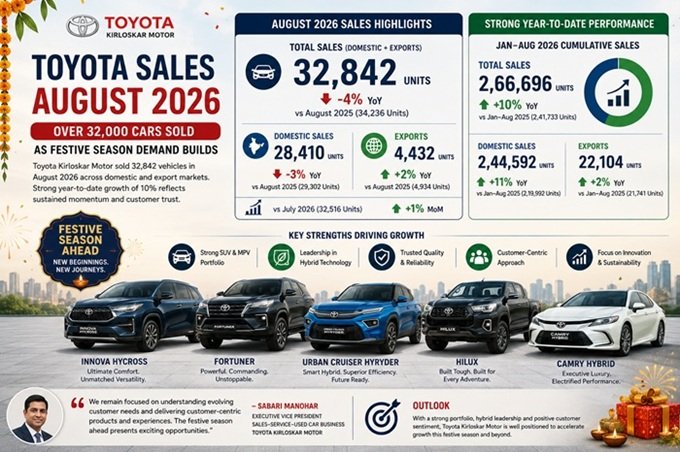
Toyota Kirloskar Motor has reported a mixed sales performance for August 2026 as the Indian automobile industry entered the crucial festive season. The company sold 28,410 units in the domestic market, compared with 29,302 units in August 2025. This represents a decline of around 3% year on year. Including exports, Toyota's total sales stood at 32,842 units, comprising 28,410 domestic units and 4,432 exported vehicles.
Although the monthly domestic figure was slightly lower than last year's number, Toyota's broader 2026 performance remains positive. Between January and August 2026, the company recorded 2,44,592 domestic sales, up from 2,19,992 units during the same period last year. That translates into an increase of approximately 11.2%. Including exports, Toyota's cumulative sales reached 2,66,696 units, registering around 10% growth over the 2,41,733 units sold during January-August 2025.
Toyota's August domestic sales also declined compared with July 2026. The company had sold 30,516 units in the domestic market during July, meaning August volumes fell by roughly 7% month on month. Despite this short-term decline, Toyota continues to maintain a strong position in India's premium mass-market and SUV segments.
The monthly decline also needs to be viewed against the broader automobile market. India's passenger vehicle industry recorded a sharp year-on-year increase in August, with wholesale volumes reaching approximately 4.48 lakh units. However, last year's lower sales base contributed significantly to the industry's growth rate.
Toyota's product portfolio remains heavily focused on SUVs, MPVs and electrified powertrains. The Innova Hycross, Urban Cruiser Hyryder and Glanza continue to be important contributors to the company's domestic volumes. These models allow Toyota to compete across multiple segments, from premium hatchbacks to family-oriented SUVs and MPVs.
The Innova range has established a strong reputation among buyers seeking spacious family vehicles, while the Hyryder gives Toyota a stronger presence in the highly competitive mid-size SUV segment. The Glanza, meanwhile, provides the company with a practical option in the premium hatchback category.
Toyota's wider portfolio also includes products such as the Fortuner, Hilux, Camry and Vellfire, helping the manufacturer maintain visibility across premium segments.
One of Toyota's biggest strengths in India is its focus on hybrid technology. The company has continued promoting strong-hybrid vehicles as an alternative for customers who want improved fuel efficiency without moving completely to a battery-electric vehicle.
This strategy is particularly relevant as India's electric vehicle market continues to expand. EV registrations increased sharply in August 2026, but conventional petrol, CNG and hybrid vehicles remain important choices for consumers because of differences in charging infrastructure, driving patterns and ownership requirements.
Toyota's diversified approach therefore gives it the ability to serve customers across different powertrain preferences rather than depending entirely on one technology.
Despite the August decline, Toyota remains optimistic about the months ahead. The company has indicated that it is positive about the opportunities created by the upcoming festive season and will continue focusing on customer needs and differentiated product experiences.
The festive period traditionally brings increased showroom visits, new bookings and higher vehicle deliveries. Toyota could benefit if demand for SUVs, MPVs and hybrid models strengthens during September and October.
See Also This: Tata Motors Sales August 2026
Toyota's August numbers highlight an important contrast: the company experienced a modest monthly decline, but its cumulative performance remains firmly in positive territory. Domestic sales of 2,44,592 units during January-August 2026, along with total cumulative sales of 2,66,696 units, demonstrate that Toyota has maintained healthy momentum throughout the year.
The immediate challenge will be to convert festive demand into stronger monthly volumes. With established products, a growing hybrid presence and a portfolio focused heavily on SUVs and MPVs, Toyota has several factors working in its favour.
Overall, August 2026 was not Toyota's strongest month in terms of year-on-year domestic growth, but the company's solid cumulative performance provides a positive foundation. As India's festive buying season gathers pace, the next few months will determine whether Toyota can regain monthly momentum and finish 2026 on a stronger note.
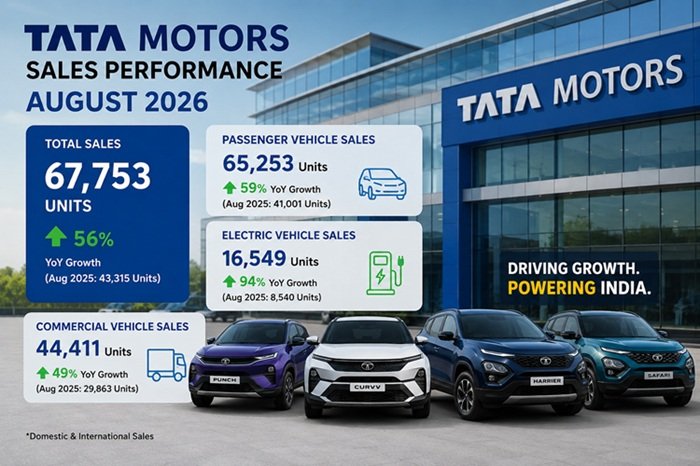
Tata Motors has delivered a powerful sales performance in August 2026, benefiting from stronger passenger-vehicle demand ahead of the festive season. The company recorded 65,253 domestic passenger vehicle sales during the month, compared with 41,001 units in August 2025. This represents an impressive 59% year-on-year growth. Tata also reported total passenger-vehicle sales of 67,753 units, including international markets, marking a 56% increase over the previous year.
Tata Motors remained India's second-largest passenger vehicle manufacturer in August, behind Maruti Suzuki. More importantly, the company widened its lead over Mahindra, which recorded 59,257 domestic passenger vehicle sales during the month. Tata's 65,253-unit domestic figure was also higher than its July 2026 performance of 62,611 units, indicating a 4.22% month-on-month improvement.
The strong result comes as India's overall passenger vehicle market experienced a major acceleration. Industry estimates suggest August wholesales reached around 4.5 lakh units, supported by festive-season preparations, increased dealer inventory and a favourable comparison with August 2025.
One of the most significant highlights of Tata Motors' August performance was its electric vehicle business. Tata's EV sales, including domestic and international volumes, reached 16,549 units, almost double the 8,540 units recorded in August 2025. This translates into approximately 94% year-on-year growth.
The strong EV numbers underline Tata's continued focus on electrification. The company's electric portfolio gives buyers options alongside its petrol, diesel and CNG-powered vehicles, allowing Tata to participate across multiple powertrain categories as consumer preferences continue to evolve.
August is traditionally an important month for Indian automakers because manufacturers and dealers prepare for the major festive buying period. Higher showroom visits, new bookings and increased vehicle dispatches can provide additional momentum to monthly sales.
For Tata Motors, the timing is particularly encouraging because its broad SUV and EV portfolio is positioned across several rapidly growing segments. Models from the company's passenger vehicle range continue to benefit from India's increasing preference for SUVs, while electric models are attracting customers looking for lower-emission mobility.
Tata Motors also entered August with a significant strategic development. On August 27, 2026, its passenger vehicle business introduced Tata.Cars as its new brand identity. The move is designed to create a stronger connection with younger and increasingly aspirational Indian consumers while refreshing the company's passenger vehicle presence.
The rebranding arrives alongside strong sales momentum, giving Tata an opportunity to build greater visibility around its product portfolio.
Tata's commercial vehicle business also recorded healthy growth during August. According to the company's official data, domestic and international commercial vehicle sales reached 44,411 units, compared with 29,863 units in August 2025, representing 49% year-on-year growth. Domestic medium and heavy commercial vehicle sales increased 31% to 17,531 units.
See Also This: Hyundai Sales in August 2026
Tata Motors' August 2026 performance shows that the company is entering the festive season with considerable momentum. Strong domestic passenger vehicle growth, rapidly rising EV volumes and continued demand for SUVs have strengthened its position in India's competitive automobile market.
However, maintaining this growth will depend on sustained consumer demand, competitive pricing, product updates and continued expansion of electric mobility. With 65,253 domestic passenger vehicle sales and 67,753 total PV sales, August has emerged as one of Tata Motors' strongest months of 2026 so far.
Contact us