
Ex-showroom Price*
On Road Price*
EMI Rs 7818 / Month For 5 years
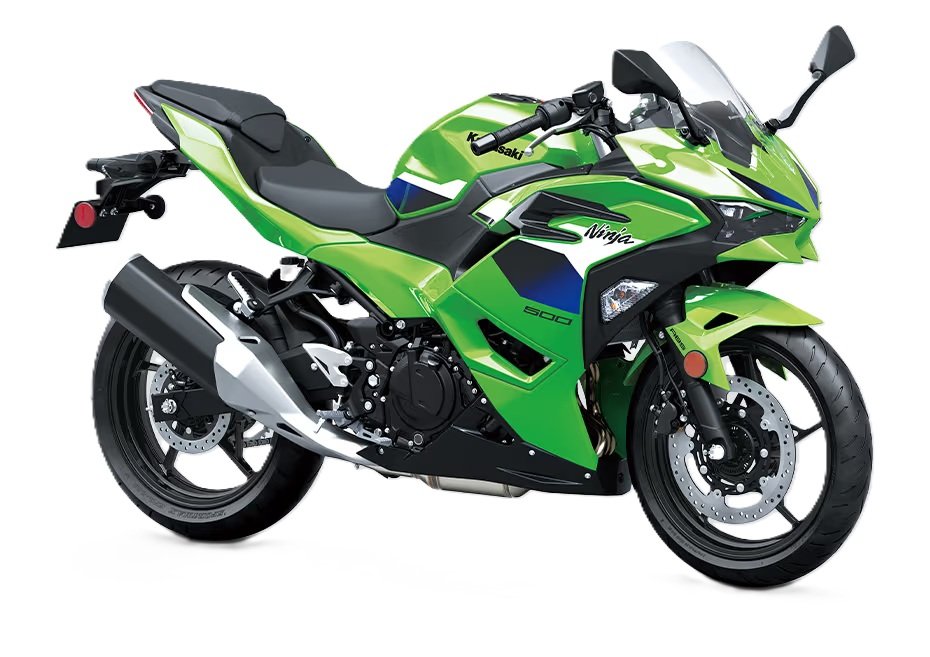
Kawasaki Ninja 500 2026 Sporty Design, 451cc Twin Engine and Premium Performance
The Kawasaki Ninja 500 2026 continues to strengthen its position in India middleweight sports-bike segment with its 2026 update. Designed to combine Ninja-family styling with everyday usability, the motorcycle gets a 451cc parallel-twin engine, lightweight trellis chassis and a comfortable riding position. Kawasaki India lists the 2026 Ninja 500 at ₹5.76 lakh ex-showroom, with the Lime Green colour giving the motorcycle a particularly distinctive appearance.
The Ninja 500 carries the unmistakable styling language associated with Kawasaki's larger supersport motorcycles. Its full fairing, sharp front profile and layered bodywork create an aggressive appearance while also helping provide wind protection during highway riding.
The 2026 model is available in Lime Green, giving the motorcycle a strong racing-inspired identity. Kawasaki has focused on maintaining a premium appearance without making the design excessively complicated.
At the heart of the Ninja 500 is a 451cc liquid-cooled parallel-twin engine. The DOHC, four-valve motor produces 45 PS at 9,000 rpm and 42.6 Nm at 6,000 rpm. It is paired with a six-speed transmission.
The twin-cylinder layout is designed to deliver smooth acceleration across the rev range, with strong low- and mid-range response as well as enough top-end performance for highway riding.
Kawasaki has equipped the Ninja 500 with a high-tensile steel trellis frame. The compact chassis has been engineered around low weight, mass centralisation and predictable handling.
The motorcycle has a 176kg kerb weight, while the wheelbase measures 1,375mm. This relatively manageable package helps make the Ninja 500 easier to control in traffic and during parking manoeuvres compared with heavier middleweight motorcycles.
Although the Ninja 500 looks like a traditional supersport motorcycle, its ergonomics are designed for everyday use. The seat height stands at 785mm, while the elevated handlebar position and slightly forward-set footpegs create a more relaxed riding triangle.
This makes the motorcycle suitable not only for enthusiastic weekend rides but also for longer journeys and daily commuting.
The Ninja 500 uses a telescopic front fork and rear monoshock arrangement. The front suspension offers 120mm of travel, while the rear provides 130mm. The motorcycle rides on 17-inch wheels with 110/70 front and 150/60 rear tyres.
Braking duties are handled by a 310mm front disc and rear disc, supported by ABS. The large front disc is designed to provide confident stopping performance during both urban and highway riding.
Kawasaki keeps the Ninja 500 relatively straightforward compared with some electronically loaded rivals. The motorcycle gets a full LCD instrument panel with smartphone connectivity, LED lighting and an assist-and-slipper clutch.
The clutch reduces lever effort and helps minimise rear-wheel hopping during aggressive downshifts, adding both comfort and confidence to the riding experience.
The 2026 Kawasaki Ninja 500 price is ₹5.76 lakh ex-showroom in India. This represents an increase over the previous model, which was listed at ₹5.66 lakh.
See Also This: Honda Rebel 300 Price Mileage Features
The Ninja 500 competes with motorcycles such as the Aprilia RS 457 and other middleweight performance bikes. The Kawasaki takes a more straightforward approach to electronics, while its 451cc twin-cylinder engine, lower 785mm seat and relaxed ergonomics focus strongly on everyday usability.
The Kawasaki Ninja 500 remains an appealing option for riders who want the visual drama of a fully faired sports motorcycle without stepping into a much larger and more demanding machine. Its 451cc parallel-twin engine, 45 PS output, lightweight trellis chassis, 785mm seat height and comfortable riding position create a balanced package. With a ₹5.76 lakh ex-showroom price, the 2026 Ninja 500 continues to target riders looking for a premium middleweight motorcycle that combines Kawasaki's iconic Ninja character with everyday practicality.
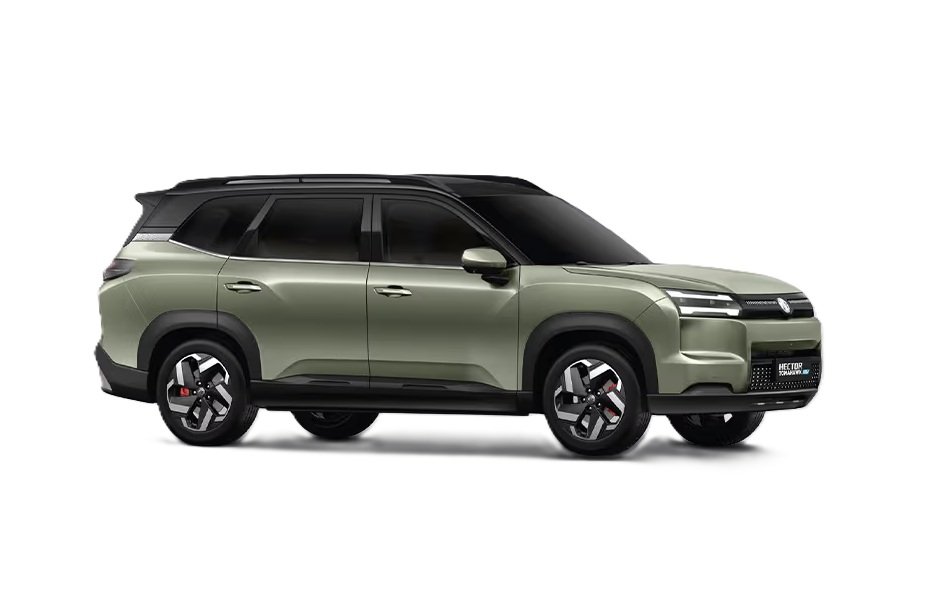
JSW MG Motor India has introduced the new MG Hector Tomahawk EV, adding a spacious electric SUV to its growing new-energy vehicle portfolio. Available with five- and seven-seat layouts, the Tomahawk EV is designed for families that want zero-emission commuting without sacrificing cabin space or long-distance usability. Its combination of a 69.2kWh battery, claimed 517km range and premium technology gives it a distinctive position in India’s electric SUV market.
The MG Hector Tomahawk EV is priced from ₹19.49 lakh ex-showroom for customers choosing the standard purchase plan. MG is also offering a Battery-as-a-Service, or BaaS, option, under which the vehicle price begins at ₹13.99 lakh. Buyers using this plan must pay an additional battery rental charge of ₹4.90 per kilometre.
The introductory prices are available for a limited period or limited number of units. The SUV is offered in Excite, Exclusive and Essence variants. Seven-seat versions are available across the range, while the five-seat configuration is reserved for the top Essence trim.
The Tomahawk EV uses a 69.2kWh LFP battery pack, which MG claims can deliver a 517km MIDC range on a full charge. This figure makes the SUV suitable for regular city travel as well as planned highway journeys. Real-world range will vary according to traffic, driving style, road conditions, temperature, passenger load and use of the air-conditioning system.
The LFP battery chemistry is also expected to offer durability and stable performance in varied operating conditions.
Power comes from a front-mounted electric motor producing approximately 201hp and 310Nm. MG claims that the SUV can accelerate from 0 to 100kmph in around 8.2 seconds. Instant electric torque should make overtaking and urban acceleration smooth, while the front-wheel-drive layout keeps the drivetrain relatively simple.
The Tomahawk EV supports DC fast charging at up to 90kW. According to MG, the battery can be charged from 30 to 80 percent in approximately 35 minutes when connected to a compatible fast charger. For home use, the SUV supports a 7.4kW AC charger, which is better suited to overnight charging.
The availability of two seating layouts is one of the Tomahawk EV’s strongest advantages. The seven-seat version offers three-row flexibility for larger families, while the five-seat model provides greater luggage space. The five-seat variant has a claimed 610-litre boot. In the seven-seat version, boot capacity stands at 192 litres with all rows in use and increases to 528 litres when the third row is folded.
Inside, the electric SUV receives a technology-focused dashboard with a large 15.6-inch touchscreen infotainment system. Other features include a digital driver display, i-SMART connected-car technology, voice assistance, wireless smartphone charging and a premium multi-speaker audio system.
A panoramic sunroof, ventilated front seats and modern upholstery add to the cabin’s premium character. The spacious interior is intended to make the Tomahawk EV comfortable for both daily use and long journeys.
MG has equipped the SUV with Level 2 ADAS features. These include adaptive cruise control, forward collision warning, automatic emergency braking and lane-assistance functions. Depending on the variant, the vehicle also receives a 360-degree camera and six airbags.
See Also This: MG Hector Tomahawk PHEV Launched In India
The Tomahawk EV supports bidirectional charging technology. Its V2L function can power compatible external devices, while V2H technology may allow the vehicle to supply electricity to a compatible home system. These features increase the SUV’s usefulness during outdoor activities, emergencies or power interruptions.
Bookings have opened, with test drives and deliveries scheduled to begin in September 2026. The Tomahawk EV will compete with premium electric SUVs such as the Mahindra XEV 9S and other upcoming three-row EVs.
The MG Hector Tomahawk EV combines a 69.2kWh battery, claimed 517km range, 201hp motor and flexible five- or seven-seat practicality. Its BaaS pricing, fast-charging capability, Level 2 ADAS and premium cabin technology make it an interesting choice for Indian families moving towards electric mobility. With deliveries beginning in September, the Tomahawk EV brings a practical and feature-rich alternative to the country’s expanding electric SUV segment.
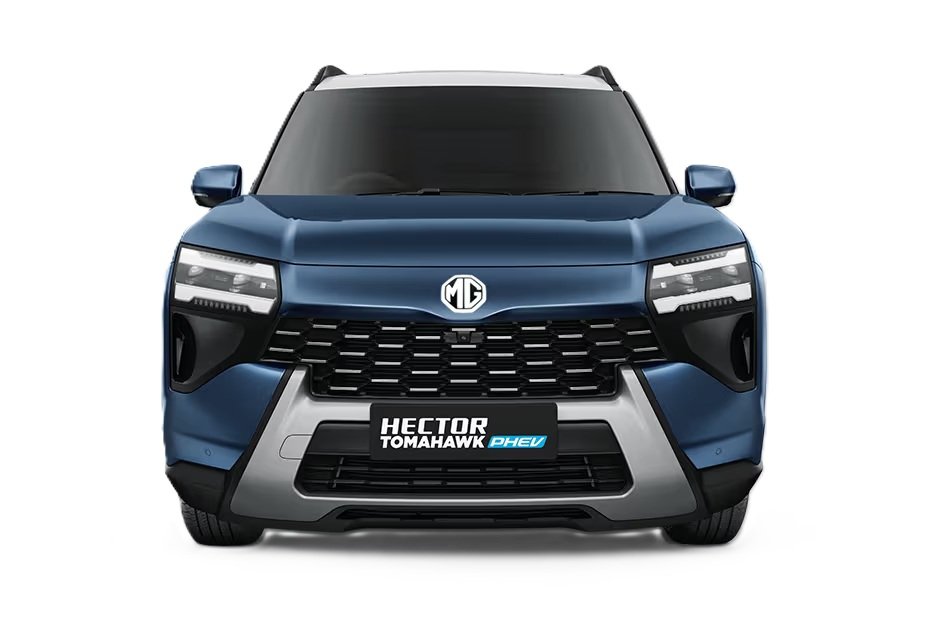
JSW MG Motor India has officially launched the new MG Hector Tomahawk PHEV in India, introducing a plug-in hybrid powertrain to the mainstream SUV market. The seven-seat SUV combines a petrol engine with a large battery pack and electric motor, offering buyers the ability to drive on electric power for daily trips while retaining petrol-powered flexibility for long journeys. The PHEV was launched on August 26, 2026, alongside the Hector Tomahawk EV.
The MG Hector Tomahawk PHEV is priced from ₹25.69 lakh ex-showroom under the standard outright-purchase option. MG is also offering a Battery-as-a-Service (BaaS) programme, under which the introductory price starts at approximately Rs 21.79 lakh, with a battery rental charge of ₹3.20 per kilometre. The top Essence variant is priced at around ₹27.79 lakh ex-showroom. These are introductory prices and may apply to limited bookings.
The biggest highlight of the Tomahawk PHEV is its powertrain. It gets a 1.5-litre naturally aspirated Atkinson-cycle petrol engine paired with a 20.5kWh battery and a permanent-magnet electric motor. The petrol engine produces 102hp and 125Nm, while the electric motor develops 201hp and 237Nm. Power is delivered through a dedicated hybrid transmission.
The PHEV can reportedly travel for more than 115km in pure-electric mode, making it possible for many daily commutes to be completed without using the petrol engine. For longer journeys, the petrol-electric combination provides additional flexibility and eliminates the range anxiety associated with a pure EV.
MG's biggest claim is its overall driving range. With a fully charged battery and a full petrol tank, the Hector Tomahawk PHEV is claimed to offer more than 1,100km of combined range. The company also claims fuel efficiency of more than 40kmpl under its stated test conditions.
The Hector Tomahawk PHEV is offered exclusively with a three-row, seven-seat layout. This makes it particularly interesting for large families that want the benefits of electric driving without giving up the flexibility of a petrol powertrain for highway travel. The cabin focuses on space, comfort and premium presentation.
Inside, the Tomahawk PHEV features a modern dashboard dominated by a large 15.6-inch touchscreen infotainment system. It also gets an 8.8-inch digital driver's display, wireless charging, powered and ventilated front seats and a panoramic sunroof. The cabin uses soft-touch materials and leatherette upholstery to create a more premium environment.
The SUV is equipped with several modern driver-assistance and convenience features, including adaptive cruise control and other advanced electronic systems. Its technology-rich cabin is designed to position the Tomahawk as a premium family SUV rather than simply an efficiency-focused hybrid.
Bookings for the MG Hector Tomahawk PHEV have opened following its launch. Test drives and deliveries are scheduled to begin in November 2026, while the EV version is scheduled to reach customers earlier.
See Also This: Honda Rebel 300 Price Mileage Features
The Tomahawk PHEV enters a market dominated by conventional petrol and diesel seven-seat SUVs. Potential alternatives include the Tata Safari, Jeep Meridian, Hyundai Alcazar and Mahindra's larger SUV offerings. However, its plug-in hybrid technology gives the MG a distinctive advantage because customers can combine electric commuting with petrol-powered long-distance travel.
The MG Hector Tomahawk PHEV marks an important step in India's new-energy SUV market. Its 20.5kWh battery, claimed 115km electric range, seven-seat layout and more than 1,100km combined range make it a distinctive proposition. With prices beginning at ₹25.69 lakh without BaaS, or approximately ₹21.79 lakh under the introductory BaaS plan, the new SUV targets buyers who want electric driving for everyday use but still demand the convenience of a petrol backup for long-distance journeys.
Contact us