
Ex-showroom Price*
On Road Price*
EMI Rs 3791 / Month For 5 years
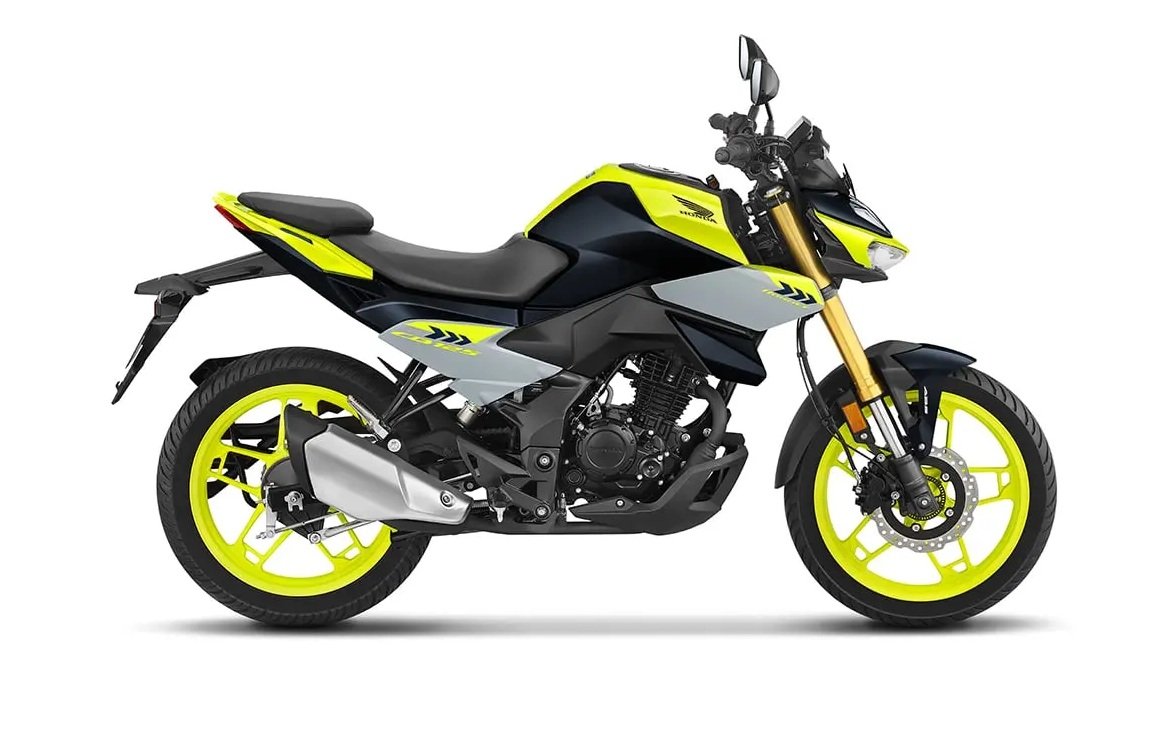
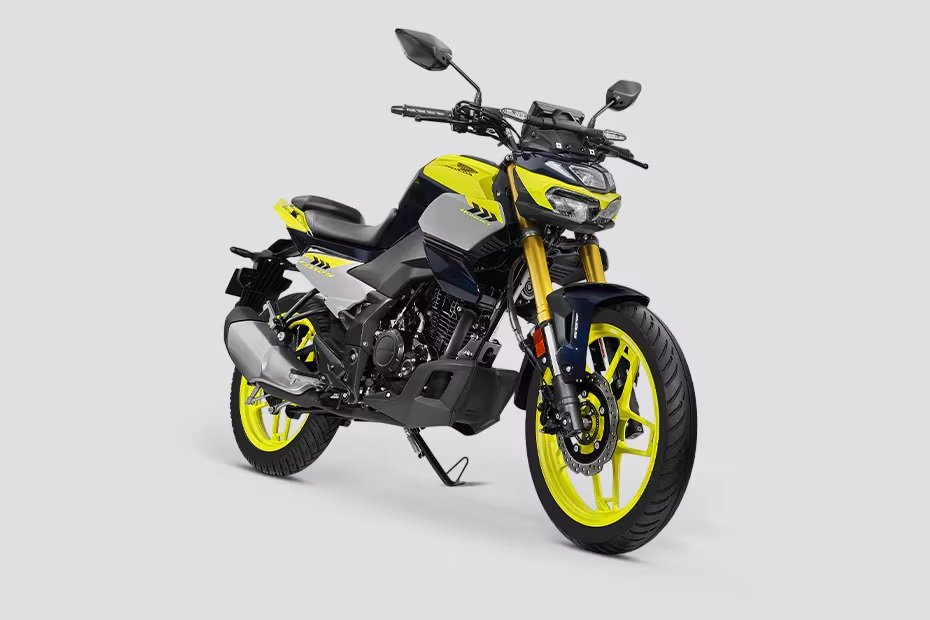
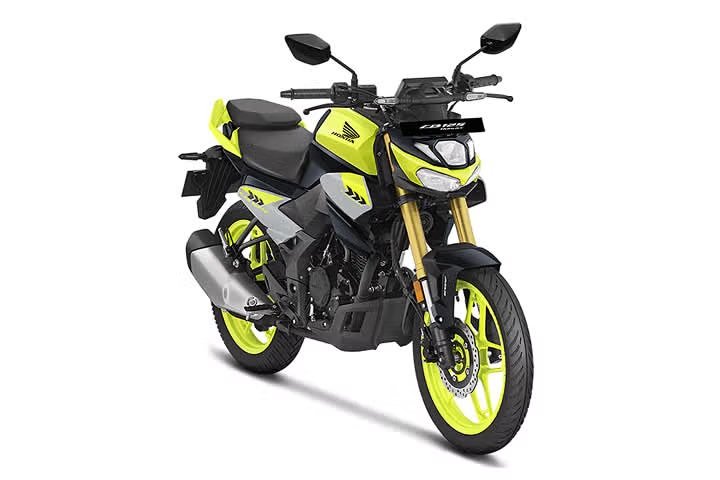
The lightweight sporty commuter segment in India is heating up again, and Honda is preparing to shake things up with the upcoming Honda CB 125 Hornet. Designed to bring Hornet-style aggression into the 125cc category, this motorcycle is expected to target young riders who want sporty looks, strong efficiency, and everyday practicality in one package.
The 125cc category in India has traditionally been dominated by commuter-focused bikes. However, customer preferences are changing rapidly. Young buyers now want motorcycles that look premium and sporty while still delivering strong mileage and affordable ownership. The Honda CB 125 Hornet aims to bridge that gap by combining the aggressive styling of larger Hornet models with the practicality of a city commuter.
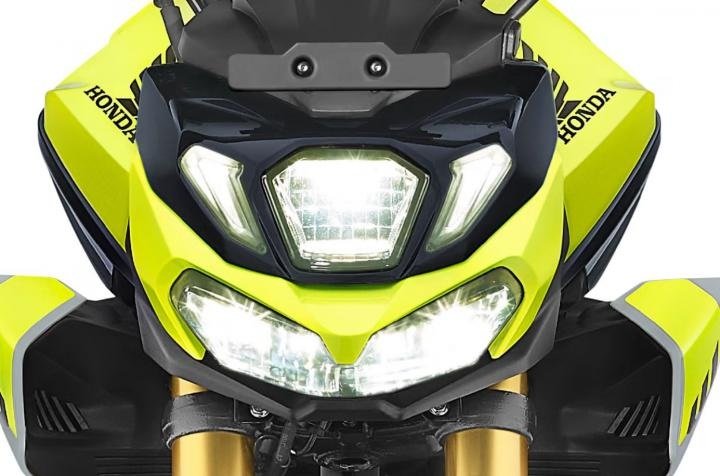
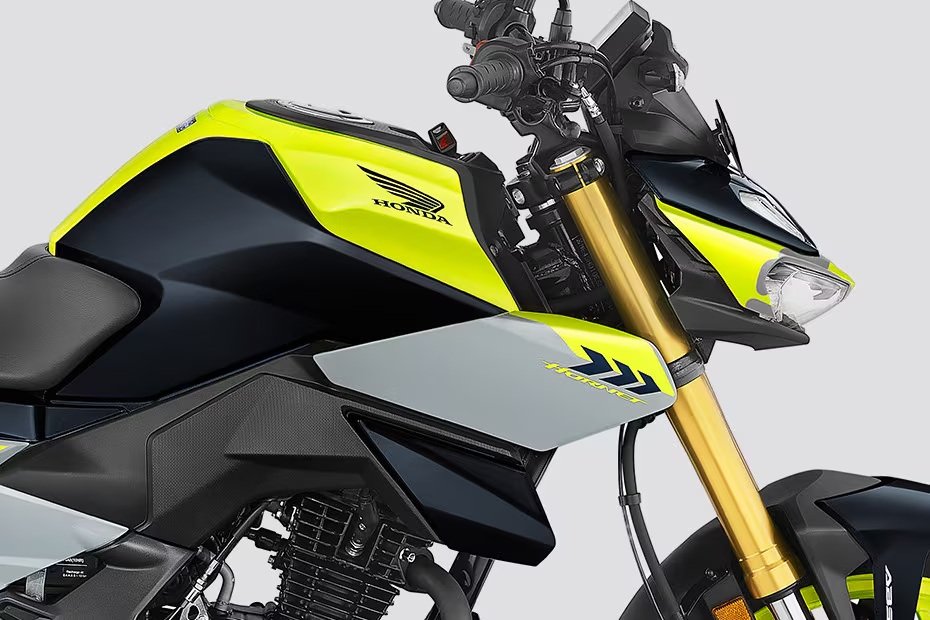
Early previews suggest the bike will carry a sharp streetfighter design language. Expect an edgy LED headlamp setup, sculpted fuel tank extensions, split seats, and bold graphics. The Hornet badge carries strong brand recall among Indian riders, and Honda is likely to leverage that appeal heavily with this launch.
The Honda CB 125 Hornet is expected to be aimed squarely at college students and first-time buyers who want a sporty motorcycle without stepping into higher engine capacity segments. Honda’s strategy is clear — offer premium styling and technology at an accessible price point.
The riding triangle will likely focus on comfort for daily use. Expect a slightly upright handlebar position, comfortable seat height, and a lightweight chassis that makes the bike easy to handle in traffic. This combination will make the motorcycle suitable for both new riders and experienced commuters.
Under the bodywork, the Honda CB 125 Hornet is expected to feature Honda’s trusted 125cc single-cylinder fuel-injected engine. While performance numbers are yet to be officially confirmed, the engine will likely prioritize smoothness, refinement, and fuel efficiency — three areas where Honda traditionally excels.
The engine could produce around 11–12 PS of power, paired with a 5-speed gearbox for relaxed highway cruising. The focus here won’t be outright performance but a balanced blend of city usability and occasional highway capability.
Honda’s refined engine tuning and smooth gear shifts are expected to remain a major highlight, making the bike appealing for daily commuting.
One of the most exciting aspects of the Honda CB 125 Hornet will likely be its feature list. The 125cc segment has become increasingly tech-driven, and Honda is expected to bring modern equipment to stay competitive.
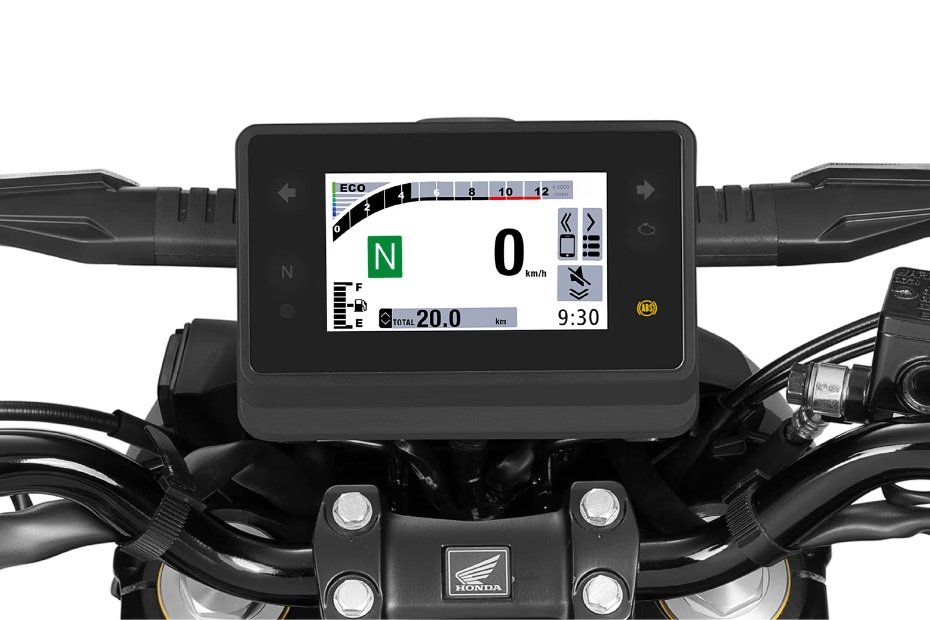
Expected features include:
These features would position the motorcycle as a premium offering within its segment, giving buyers a taste of big-bike technology at a lower price.
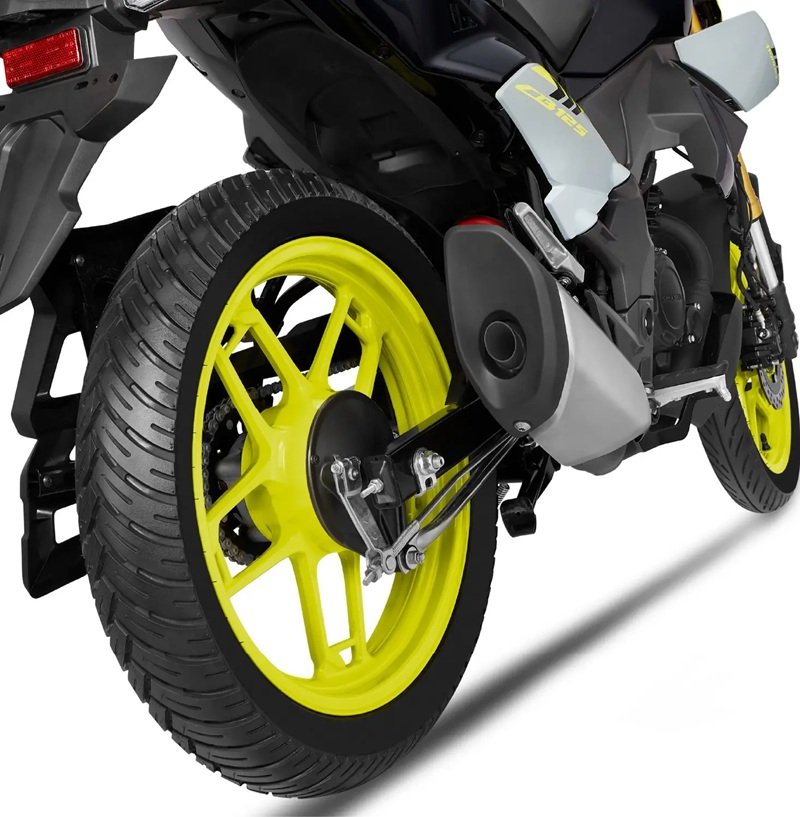
The CB 125 Hornet is expected to use a lightweight diamond-type frame, ensuring agile handling and easy maneuverability. Suspension duties could be handled by telescopic front forks and a rear mono-shock, offering a balance between comfort and sporty riding.
Disc brakes at the front with CBS (Combined Braking System) are likely, ensuring safe and predictable braking performance for everyday riding.
The 125cc sporty commuter segment is becoming increasingly competitive. The CB 125 Hornet will likely compete with popular models like the TVS Raider 125, Bajaj Pulsar NS125, and Hero Xtreme 125R.
Honda’s biggest advantage lies in its brand reliability, engine refinement, and strong resale value. With the Hornet branding and aggressive design, the company hopes to attract buyers looking for a stylish yet dependable commuter motorcycle.
The motorcycle is expected to launch in India within the next year as part of Honda’s strategy to strengthen its commuter portfolio. Pricing is expected to be competitive, likely positioned between Rs 1.14 Lakh (ex-showroom).
The CB 125 Hornet could play a key role in Honda’s strategy to attract younger riders. By combining sporty styling, practical performance, and modern features, the bike has the potential to become a strong contender in India’s rapidly evolving 125cc segment.
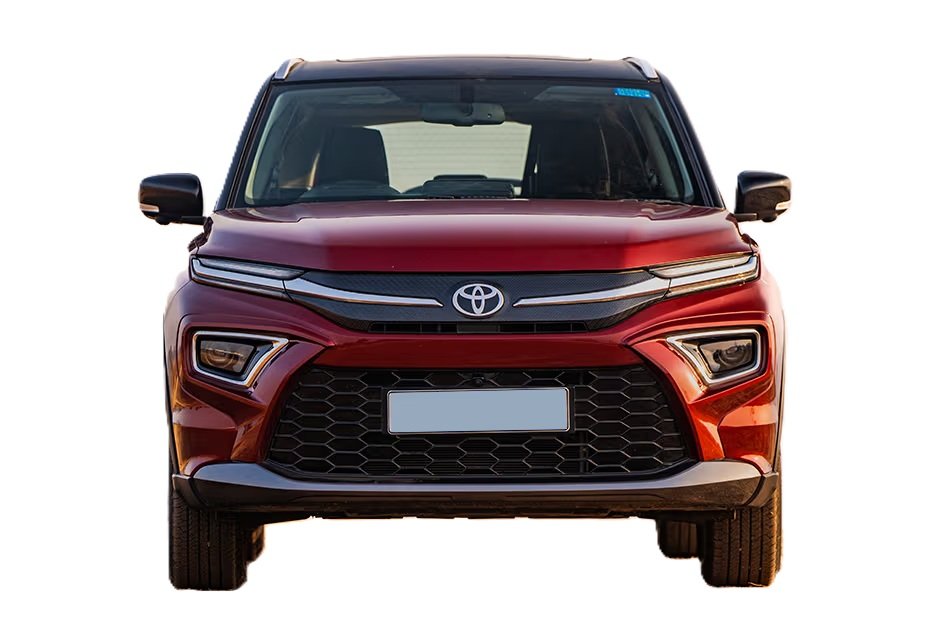
Toyota Urban Cruiser Hyryder New Variant Launched
Toyota Kirloskar Motor has expanded the Toyota Urban Cruiser Hyryder lineup with a new Aero Black Edition, giving the popular midsize SUV a darker and sportier appearance. The new edition is positioned as a limited-edition styling package rather than a mechanical update. It brings black-themed exterior enhancements to the SUV while retaining the existing powertrain options. The move is aimed at customers who want the Hyryder’s hybrid efficiency and Toyota ownership experience with a more distinctive road presence.
The biggest attraction of the new Hyryder Aero Black Edition is its exterior styling. Toyota has added blacked-out elements to create a more aggressive appearance. Chrome detailing around the grille, bumper and tailgate is replaced or finished in a darker theme, giving the SUV a sportier visual identity.
The styling package is designed to make the Hyryder look more premium without changing its core design. Customers who prefer an understated yet bold appearance may find the new black treatment particularly appealing.
The Aero Black Edition is being offered as a ₹31,999 styling package. This means buyers are essentially paying for the additional cosmetic treatment rather than a new engine or major technology upgrade.
Toyota’s strategy allows the company to introduce a visually differentiated version without significantly altering the established Hyryder range. The package can therefore appeal to buyers who want their SUV to stand apart from standard variants.
The new Aero Black treatment is not restricted to a single powertrain configuration. Reports indicate that the package is available with the Midnight Black G and V variants, including both the 1.5-litre normal petrol and 1.5-litre strong-hybrid petrol powertrains. This gives customers flexibility to combine the new styling with their preferred engine technology.
The wider availability also makes the edition more attractive because buyers do not have to move to a particular engine solely to get the special appearance.
Unlike a facelift or new-generation model, the Aero Black Edition does not introduce major mechanical changes. Toyota has retained the existing Hyryder powertrain lineup, meaning customers should not expect a major difference in performance or fuel efficiency simply because of the new edition.
The Hyryder continues to offer petrol and strong-hybrid powertrain choices, along with CNG availability in the broader lineup. Current specifications list manual, automatic and e-CVT transmission options depending on the chosen powertrain.
The Hyryder’s strong-hybrid technology remains one of its biggest selling points. Toyota says the self-charging strong-hybrid system can operate for a significant proportion of driving using electric power, while the official claimed efficiency reaches 27.97kmpl for the strong-hybrid version.
This combination of SUV practicality and hybrid efficiency has helped the Hyryder establish a strong position in India's midsize SUV market.
Although the Aero Black Edition mainly focuses on exterior styling, the regular Hyryder continues to offer a substantial equipment package. Depending on the variant, features include a panoramic sunroof, ventilated seats, a 9-inch touchscreen infotainment system, wireless Apple CarPlay and Android Auto, wireless charging and a 360-degree camera.
Toyota has also introduced a separate Tech Package for the Hyryder, bringing additional convenience features across the range.
The new Aero Black Edition is clearly aimed at customers who consider appearance an important part of the buying decision. Black exterior detailing has become increasingly popular among SUV buyers because it gives vehicles a more premium and aggressive character.
For Toyota, the edition also provides an opportunity to refresh interest in the Hyryder without waiting for a full facelift or major generation change.
See Also This: Bajaj Pulsar N160 S Price Mileage features Specifications
The Toyota Urban Cruiser Hyryder competes in one of India's most crowded SUV categories. It faces rivals such as the Hyundai Creta, Kia Seltos, Maruti Suzuki Grand Vitara, Skoda Kushaq, Volkswagen Taigun and Tata Sierra.
Its strong-hybrid technology remains an important differentiator, while the new Aero Black Edition adds another reason for customers to consider the Toyota.
The Toyota Urban Cruiser Hyryder Aero Black Edition is a styling-focused update rather than a mechanical upgrade. With its darker exterior treatment, ₹31,999 package and availability with selected G and V variants, the new edition adds a more distinctive character to Toyota’s popular SUV.
For buyers who already like the Hyryder’s hybrid technology, practicality and Toyota brand value but want a sportier appearance, the Aero Black Edition could be an appealing new choice.
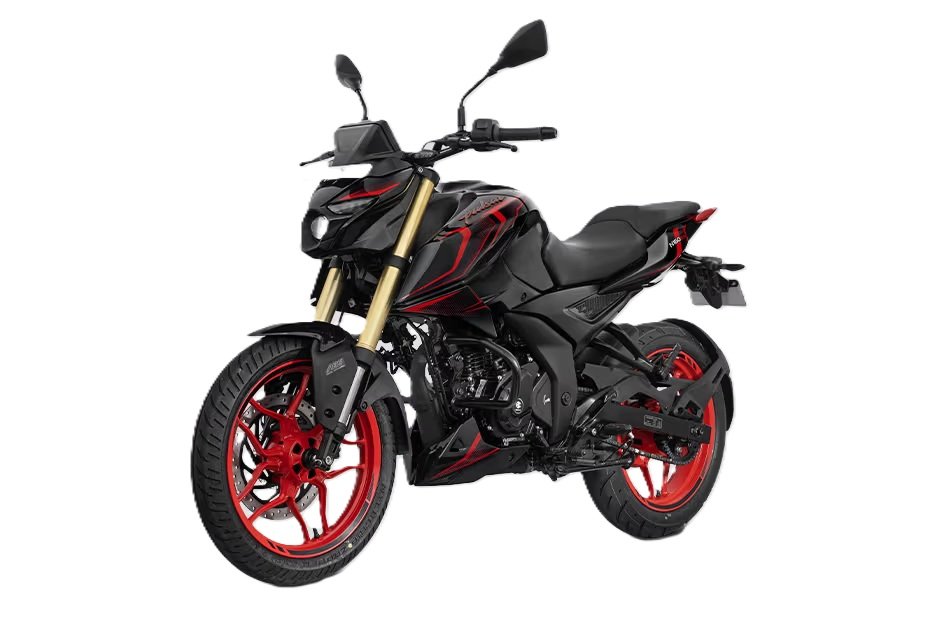
Bajaj Auto has expanded its popular Pulsar lineup with the launch of the new Pulsar N160 S, bringing a fresh combination of performance, technology and sporty styling to the 160cc motorcycle segment. The new-generation model has been introduced alongside the N160 SS and gets a major mechanical update in the form of a new 4-valve engine. The motorcycle is aimed at young riders looking for a sporty commuter with modern features and improved everyday usability.
The biggest change in the new Pulsar N160 S is its updated powertrain. Bajaj has moved to a 164.5cc, single-cylinder, 4-valve engine, replacing the earlier engine configuration. The new motor is designed to deliver stronger performance while maintaining the practical characteristics expected from a street motorcycle.
The 4-valve setup allows the engine to breathe more efficiently and is expected to provide smoother power delivery across the rev range. This makes the N160 S more attractive to riders who want a balance between daily commuting and weekend riding.
Another important addition is Electronic Throttle (ETB) technology. This system allows the motorcycle to manage throttle response electronically rather than relying solely on a conventional mechanical connection.
The technology has also enabled Bajaj to introduce multiple riding modes. According to reports, the new motorcycle offers four riding modes, giving riders greater flexibility depending on road and riding conditions.
The four riding modes are designed to change the motorcycle's character according to the rider's requirements. This is particularly useful in varied Indian riding conditions, where riders may encounter congested city roads, wet surfaces and open highways.
The addition of multiple riding modes gives the N160 S a more premium technology package than many traditional motorcycles in the same displacement category.
The Pulsar N160 S gets an LCD instrument console instead of the larger TFT display offered on the more expensive N160 SS. However, the equipment list remains practical, with Bluetooth connectivity and turn-by-turn navigation.
This means riders can connect their smartphones and access navigation information without having to depend entirely on a separate phone mount. The setup keeps the motorcycle technologically relevant while maintaining a relatively straightforward dashboard.
Design remains one of the strongest attractions of the Pulsar family, and the N160 S continues that tradition. The motorcycle carries a muscular streetfighter-inspired appearance, featuring a sharp front profile, sculpted fuel tank and sporty bodywork.
The design gives the motorcycle a larger visual presence than its engine capacity suggests. Bajaj has also introduced new colour choices including **Atlantic Blue, Pearl Metallic White and Brooklyn Black**, giving buyers more options to personalize their motorcycle.
The existing Pulsar N160 platform is known for its strong braking package and balanced chassis. Bajaj's current N160 range features a 164.82cc engine, dual-channel ABS on selected variants, and premium suspension hardware on higher versions. The existing model also offers a 37mm upside-down fork on select variants.
The latest N160 S, however, is positioned as the more accessible version compared with the feature-rich N160 SS, making the variant strategy important for buyers deciding between technology and price.
The Bajaj Pulsar N160 S has been launched in India at an ex-showroom price of ₹1.34 lakh. Some reports quote the introductory price at around ₹1.33 lakh, depending on the source and rounding.
The higher-spec Pulsar N160 SS is priced at around ₹1.43 lakh ex-showroom.
Bajaj has launched the N160 S alongside the N160 SS to give customers two different choices. The N160 S uses an LCD display with Bluetooth and navigation, while the N160 SS receives a larger 5-inch TFT display and Google Maps integration.
This differentiation allows Bajaj to target buyers seeking essential connected features with the N160 S, while premium-focused customers can choose the SS version.
See Also This: Ducati Monster 2026 Price Mileage Features performance
The arrival of the new Pulsar N160 S makes the competition in India's 160cc motorcycle segment even more interesting. With its updated engine, electronic throttle technology, multiple riding modes and connected features, the motorcycle brings equipment that was previously more common in higher-priced motorcycles.
The Bajaj Pulsar N160 S represents a significant technological step for the Pulsar N160 family. Its new 4-valve engine, electronic throttle, four riding modes, Bluetooth connectivity and navigation-focused LCD console make it a more modern proposition for Indian riders.
For customers seeking a sporty motorcycle with contemporary technology without moving into a premium displacement category, the new N160 S could become an important option in Bajaj's growing Pulsar range.
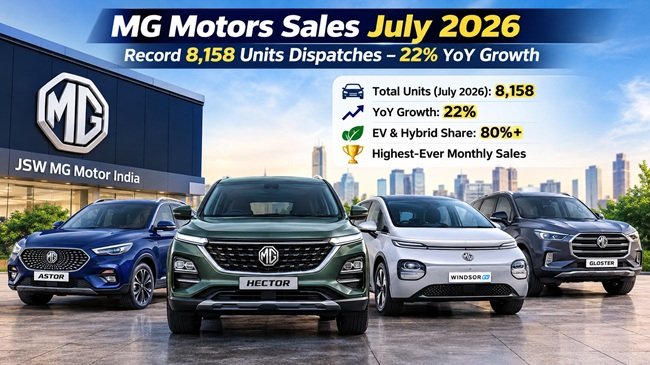
MG Motor Sales July 2026 Records Strong July Performance
JSW MG Motor India delivered a strong sales performance in July 2026, registering its highest-ever monthly wholesale sales. The company dispatched 8,158 vehicles to dealers during the month, marking a 22% year-on-year increase compared with July 2025. The latest performance highlights growing customer interest in MG’s electric and new-energy vehicle portfolio in the Indian market.
The July 2026 figure represents an important milestone for MG Motor India. The automaker’s wholesale dispatches increased significantly from the previous year, showing that demand for its products continues to strengthen. The company had reported 6,678 units in July 2025, when it recorded 46% year-on-year growth and its highest monthly sales at that time.
With 8,158 units dispatched in July 2026, MG has now raised its monthly sales benchmark further. The performance also comes after the company reported 7,568 units in June 2026, which itself was a record monthly figure and represented 30% year-on-year growth.
One of the biggest highlights of MG’s July performance was the contribution from its New Energy Vehicle portfolio. Electric and hybrid models accounted for more than 80% of the company’s total wholesale dispatches during the month. This indicates that electrified models are becoming increasingly important to MG’s overall sales strategy in India.
The strong contribution from EVs and hybrids reflects changing consumer preferences, particularly among buyers looking for lower running costs and modern technology. MG has increasingly positioned itself as an important player in India’s electric passenger vehicle segment.
The MG Windsor continues to play a major role in the company’s electric vehicle strategy. JSW MG Motor India announced in July that the Windsor had crossed the 75,000-unit sales milestone in less than two years since its launch. The company also said that more than 19,000 Windsor units were sold during the first half of calendar year 2026.
The Windsor’s performance has helped MG strengthen its position in India’s EV market. According to the company, its overall sales grew 13% year-on-year during the first half of 2026, underlining the importance of its new-energy lineup.
MG is also broadening its product range beyond conventional SUVs and electric crossovers. The company has commenced deliveries of the MG Majestor, its flagship SUV, while continuing to develop its electric and hybrid portfolio. The automaker has indicated plans to add two new EVs and one plug-in hybrid vehicle during the financial year.
This strategy could help MG address a wider range of customers as demand for SUVs, premium vehicles and electrified models continues to rise.
The July sales result demonstrates that MG Motor India is gaining momentum in an increasingly competitive passenger vehicle market. Recording 8,158 units in a single month gives the company a stronger base for the second half of 2026.
The high share of electric and hybrid vehicles is particularly significant because it shows how quickly electrification is becoming central to MG’s business in India. Continued demand for the Windsor, combined with new product launches, could further support sales in the coming months.
See Also This: Hyundai Sales July 2026: Monthly Performance with 75,360 Units
MG Motor India enters the next phase of 2026 with positive momentum. Its record 8,158-unit July wholesale sales, 22% year-on-year growth and more than 80% contribution from EVs and hybrids underline the company’s changing market position.
With additional new-energy products planned and established models continuing to attract buyers, MG is aiming to strengthen its presence across India’s rapidly evolving passenger vehicle market.
Contact us